

Artificial intelligence has become one of the most exciting and controversial technologies in business. Depending on who you ask, AI will solve every problem, eliminate every job, destroy the environment, or fade away as another overhyped trend.
The truth is less dramatic and more useful.
AI is becoming a permanent part of computing. For Dayton’s B2B companies, manufacturers, professional service firms, government subcontractors, nonprofits, and small businesses, the best response is not fear or blind enthusiasm. It is education, experimentation, and thoughtful adoption.
AI Is Not Going Away
The controversy surrounding AI data centers is real. Communities across Ohio have raised valid concerns about electricity demand, water use, noise, land development, tax incentives, and whether these facilities create enough local jobs to justify their impact. Dayton has also debated restrictions on large data centers.
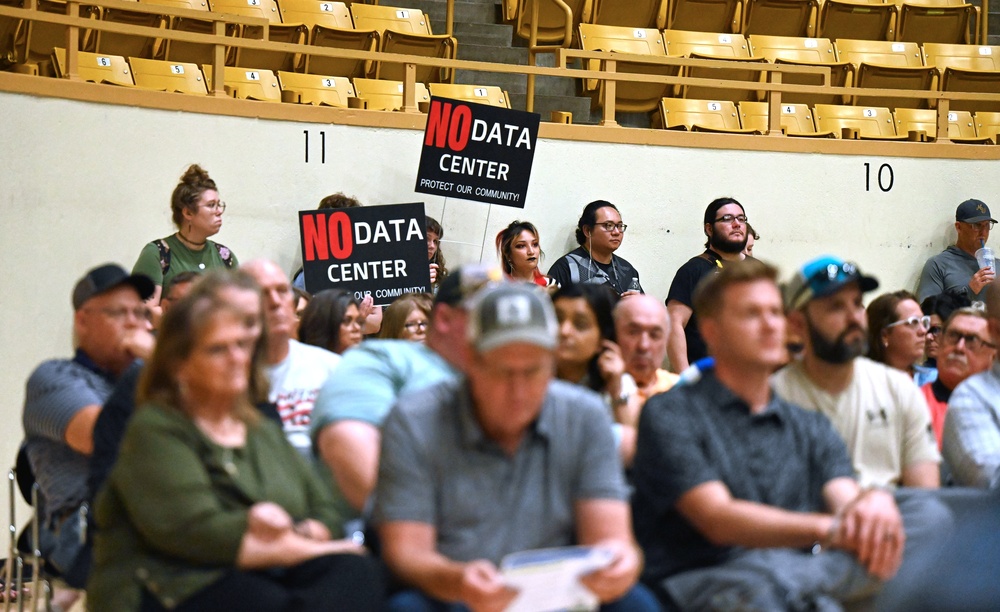
Those questions deserve serious discussion. Communities have every right to demand transparency and protections for residents and utility customers.
Opposing a particular data center is still different from pretending AI itself can be stopped.
Think about bottled water. You may stop buying it because of plastic waste, but that choice does not make bottled water disappear. Addressing the larger problem requires better packaging, regulation, infrastructure, and corporate responsibility. Pushing bottled water manufacturers to use recycled plastic, and BPA-free plastic.
When new technologies are introduced, it often takes us a few years, even decades, to figure out how to responsibly and safely include that technology in our daily lives in a sustainable way.
AI is similar. The better question is not, “How do we make AI go away?” It is, “How do we use and develop it responsibly?”
For example, and speaking of water, these data centers apparently tap directly into municipal water supplies and use clean water to cool their massive computers. Why can’t they use brown water or recycled wastewater?
We Have Seen This Kind of Change Before
Thirty years ago, many businesses were skeptical of the internet. Some feared online commerce. Others believed websites were unnecessary. Hell, in 1999 some folks even thought the entire digital world was going to end at midnight on January 1st, 2000!
Some fears were justified (okay, maybe not the Y2K fears). The internet disrupted industries and eliminated positions. It also created jobs, launched industries, and gave small businesses access to markets previously out of reach.
Today, most Dayton businesses rely on the internet for email, banking, recruiting, marketing, research, sales, and customer service. Many could not exist in their current form without it.
AI will create similar disruption. Some jobs and tasks will change or disappear. New roles, services, and companies will emerge. Businesses that learn the technology will be better positioned than those that ignore it.

Where AI Can Help a Dayton B2B Company
The most valuable uses of AI are often practical, not flashy.
A salesperson can organize notes before a client call, research an unfamiliar industry, or improve a follow-up email. A manufacturer can summarize technical information or develop training materials. A marketing team can brainstorm campaign ideas, repurpose an interview, or analyze customer feedback. A business owner can turn rough thoughts into an agenda, proposal outline, job description, or process document.
AI can make repetitive work faster and give employees a stronger starting point without pretending the tool is an expert employee.
AI can also be confidently wrong. It can misunderstand context, flatten your brand voice, expose confidential information, and produce generic work. Important outputs still require human review, judgment, and accountability.
In other words, humans will always have a role in proofreading AI output.
Where ruef Draws the Line
At ruef Creative, we believe AI should support human creativity, not replace it.
We do not use generative AI to create video content for our clients. Great video depends on real people, original footage, thoughtful interviews, strong storytelling, and human connection. An artificial person standing in an artificial factory may be fast to produce, but it rarely communicates the credibility B2B buyers need.
We may occasionally use generative tools to extend a background or fill an empty area in an existing photo. We do not treat AI imagery as a replacement for professional photography or original design.
In our view, mass-producing artificial videos and images is one of the least valuable uses of AI. The strongest applications are often behind the scenes, helping real people research, organize, and work more efficiently.
Human Relationships Still Win Business
No AI tool can replace trust.
For most Dayton B2B companies, relationships still drive business. Customers want a knowledgeable voice on the phone, a face-to-face conversation, and a real person who will be accountable.
AI can help prepare for that conversation. It cannot replace it.
The businesses that benefit most will use AI to reduce low-value work and give their people more time for strategy, service, creativity, and relationships.

Frequently Asked Questions (AI FAQ)
Should our company allow employees to use AI?
Usually, but with clear rules. Companies should establish an AI policy covering approved tools, confidential information, customer data, proprietary processes, fact-checking, and human review. This is especially important for government subcontractors and regulated B2B organizations.
Can we trust information produced by AI?
Not automatically. AI can help with research and drafting, but important facts must be verified. Treat it as an assistant, not an unquestioned authority. Never replace human intuition with computer generation.
Where should a small business begin?
Start with one or two low-risk tasks, such as meeting summaries, brainstorming, document outlines, internal training materials, or first drafts. Measure the value and expand carefully.
Learn It Before You Fear It
AI has real downsides, and the environmental debate around data centers should not be dismissed. Responsible adoption requires better technology, thoughtful policies, transparent development, and clear limits.
It also presents a major opportunity for Dayton businesses.
You do not need to chase every trend or automate your entire company. You need to understand what the tools can do, where they fail, and how they can support the people who already make your business successful.
AI will not replace human expertise, creativity, or connection. Used responsibly, it can help all three go further.