
full scale video production for the American hardwood
The National Hardwood Lumber Association (NHLA) has set and maintained the hardwood lumber industry’s grading rules since 1898. Its work also includes education, advocacy, member services, and public resources for the North American hardwood supply chain.
NHLA needed a series of educational films on carbon sequestration, renewability, and biophilic design. The material had to be technically sound, but the films could not assume that every viewer understood forestry, carbon science, or the hardwood supply chain.
ruef partnered with the Timber & Forestry Foundation to produce the films for NHLA, with help from the USDA Forest Service. We coordinated subject-matter experts traveling to Dayton, sent crews to multiple states for additional interviews and b-roll, filmed at working member facilities, and carried the project from scripting and storyboarding through final delivery.
The completed series includes How Trees Save the World: Carbon Sequestration Explained, Trees: The Ultimate Renewable Resource, and Embracing Biophilic Design Through the Use of American Hardwoods.

our process
We began by determining what each film needed to teach and what the audience would need to see to accomplish that.
ruef worked with the project partners and dozens of subject-matter experts to organize the content into scripts and storyboards. We identified which ideas were best explained by an expert on camera, which required exact narration, and which needed animation or graphics.
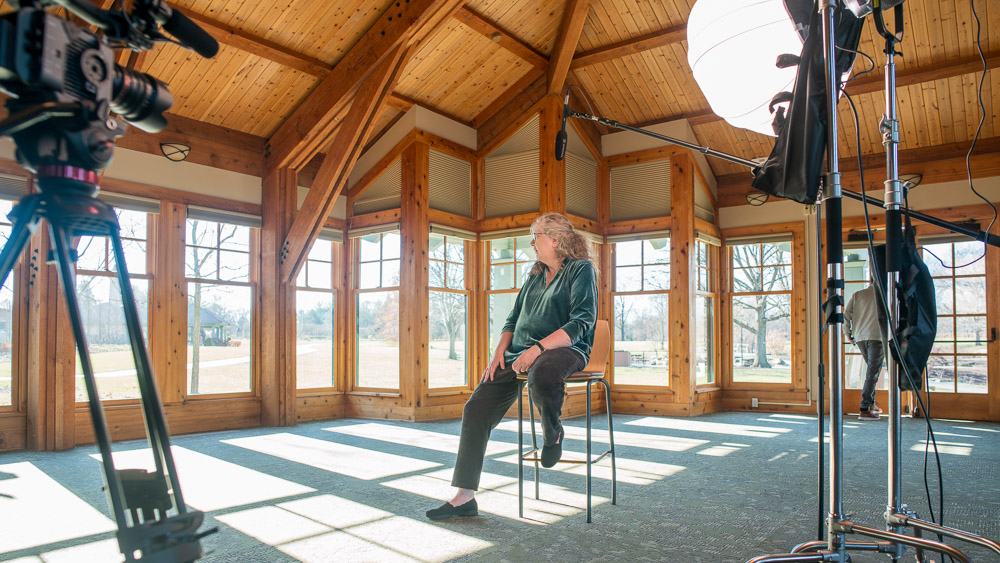
We also wrote the interview questions. The edit depended on complete, useful answers, not general talking points. Experts often begin several steps beyond what a general audience knows, so the questions gave each interview enough structure to cover the required material while allowing people to speak naturally.
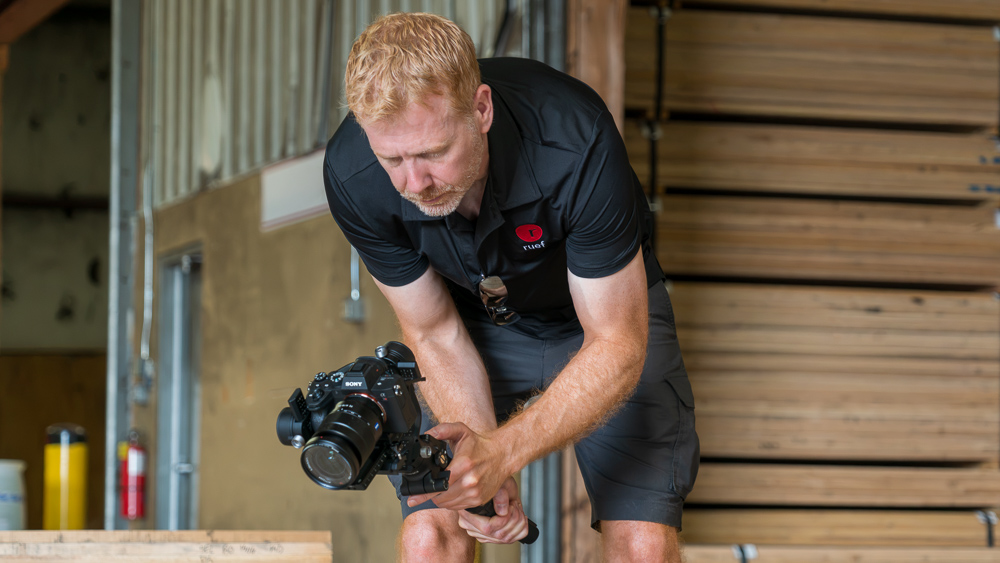
Some experts traveled to Dayton. In other cases, ruef traveled to them. Our crews filmed in multiple states, gathering interviews and b-roll indoors, outdoors, and inside active NHLA member facilities. Those locations supplied footage that could not be recreated elsewhere, but production had to fit around actual operations and available access.
Several topics also needed historical context. ruef combed through hundreds of hours of public-domain archival film, along with extensive collections of historic photography, to find material that supported the scripts. The selected footage and images helped connect current discussions about forestry, manufacturing, and American hardwoods to the people, practices, and industries that shaped them.
Live-action footage could not show every process in the scripts. Motion graphics organized technical information, while custom 3D animation made concepts visible when they happened over time, at an unseen scale, or within systems a camera could not capture. Professional voiceover connected the interviews, locations, archival material, and animated sequences.
The review process carried its own complexity. Several organizations and experts had a stake in technical accuracy. A revision to one statement could affect narration, on-screen text, animation, archival selections, and the edit. ruef managed those dependencies through each round of review and final post-production.
The series stretched from historical archives and forests to laboratories, working lumber facilities, interview sets, and full animation production, drawing on nearly every part of the filmmaking process.
This was ruef’s film production at full scale.

results
NHLA now has a coordinated series of educational films, each built around a different part of the hardwood story.
The carbon sequestration film explains how trees remove carbon dioxide from the atmosphere and how that carbon can remain stored in wood products. The renewability film examines forest regeneration, responsible management, and the continued availability of the resource. The biophilic design film moves into the built environment, exploring how natural materials can affect the way people experience interior spaces.
Each film can stand on its own for a specific audience or discussion. Together, they give NHLA and its members a consistent set of resources for conversations involving climate, forestry, architecture, interior design, and material selection.
The films look and sound like one body of work despite being assembled from different experts, states, facilities, production conditions, graphic sequences, and animated scenes. That consistency began with the scripts and storyboards and continued through production, post-production, and stakeholder approval.
The series gives viewers enough context to follow the subject and enough evidence to understand where the claims come from.
Embracing Biophilic Design
Let's create a good idea together.